
Why mulching fits so much Maury County land
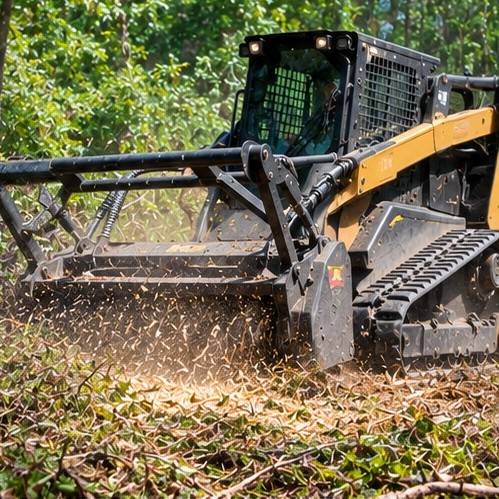
A lot of the land for sale around Columbia is not true forest. It is old pasture or hay ground that someone stopped mowing, and it filled in fast. Eastern red cedar leads the way, followed by privet, bush honeysuckle, hackberry, sumac, sassafras and blackberry. That kind of growth is exactly what a mulcher is built for: stems from pencil-thin to several inches across, packed too tight for a bush hog and too small to be worth hauling to a mill.
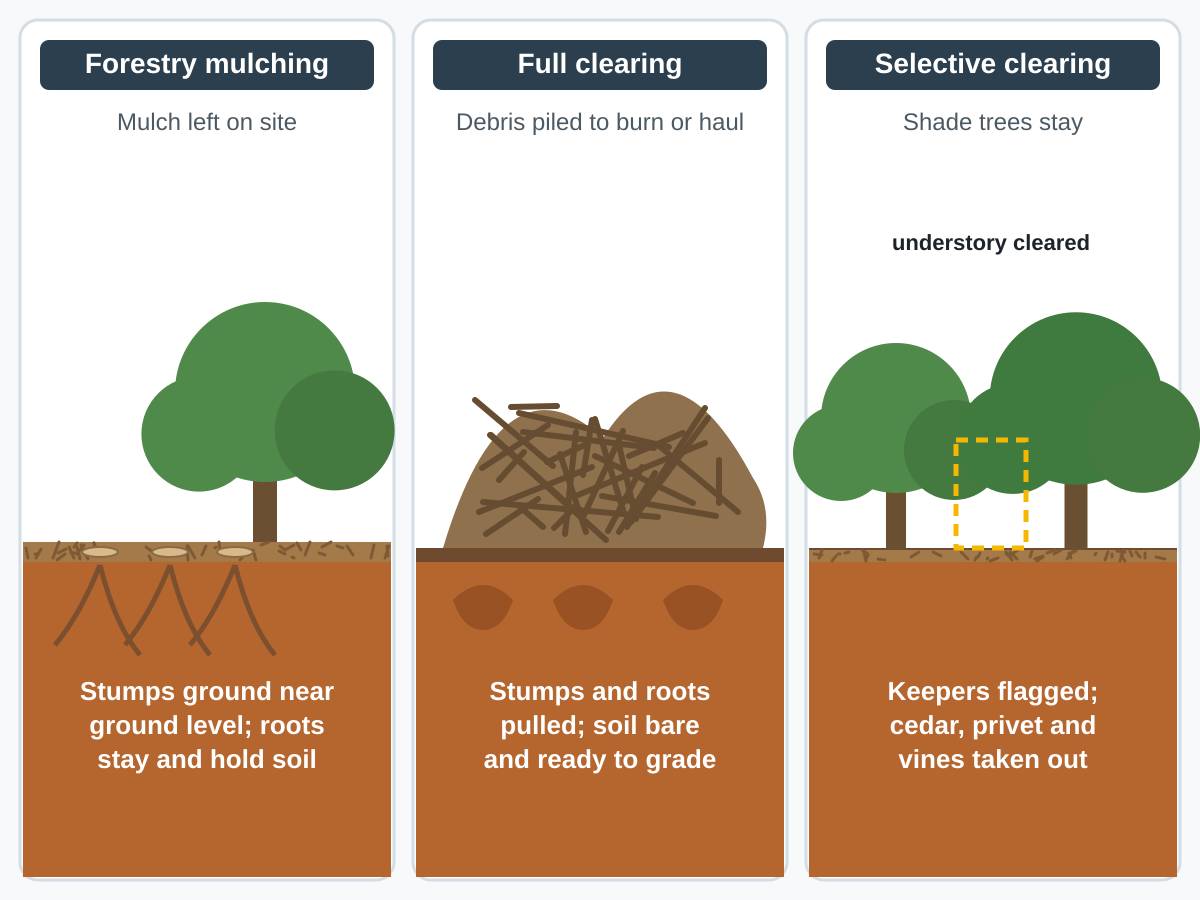
Mulching also suits the ground. The clay soils here shed water quickly once they are bare, and a sloped field that is pushed clean in March can be carved with gullies by May. A mulch layer covers the soil the day it is cut, the roots stay in place to hold it, and there is no burn pile to wait on a permit day. The rules for burning and bare ground are covered in our Maury County land clearing rules guide.
Signs forestry mulching is the right tool
- A field that has gone to cedar. If you can still see the old field shape but cannot walk through it, mulching is usually the fastest way back to open ground.
- Fence rows that turned into hedgerows. Cedar and hackberry grow up through old wire until the fence is inside a tree line. See pasture and fence line clearing.
- Trails, shooting lanes or a view. A mulcher can open a path or a sight line through thick understory without disturbing the soil the way a dozer blade does.
- Brush under trees you want to keep. Operators can work around flagged oaks, walnuts and hickories and clear the privet and honeysuckle underneath them.
- Hillsides and wet-weather drains. Where bare soil would wash toward a creek, a mulched surface is the gentler option.
When mulching is not enough
Mulching leaves stumps close to the ground and roots in the soil. That is a feature for pasture, but a problem under a house, a barn slab, a septic field line or a gravel drive that needs a firm base. Large hardwoods can also be more than a mulcher should take on. On most homesites the best result is a mix: the building footprint and driveway are cleared with an excavator and stumps removed, while the rest of the lot is mulched. See lot clearing for homes, barns and driveways.
What a mulching job usually looks like
- Walk the tract together. Mark property corners, trees to keep, wet areas, sinkholes, old wells and anything buried. Rock outcrops and old wire are the two things that wreck mulcher teeth, so point them out.
- Agree on the finish. "Mulched to grade" means different things to different operators. Ask how low the stumps will be, how thick the mulch will lie, and whether the edges will be cleaned up.
- Mobilize and cut. The machine works in passes, grinding standing material. Dense cedar on flat ground moves faster than scattered hardwoods on a slope.
- Clean-up and review. Walk it again before the machine leaves. It is far cheaper to fix a missed corner while the trailer is still there.
- Seed or plant. On pasture ground, plan for a soil test, lime and a seeding window. Fall seeding of cool-season grass is common in Middle Tennessee; UT Extension can suggest dates for your field.
What drives the cost of forestry mulching
Mulching is priced per acre or per machine hour, usually with a minimum and a mobilization charge for bringing the machine out. The things that move the number most around Columbia:
- Density and stem size: a solid stand of cedar takes longer than scattered brush, and trunks over about six inches slow any machine down.
- Terrain: steep hollows, rock ledges and soft ground near springs reduce how much a machine can do in a day.
- Old fence and trash: wire, T-posts and old farm debris hidden in the brush have to be found and pulled first.
- How clean a finish you want: a rough pass for a hunting lane costs less than a mowable, groomed finish.
- Size of the job: a half-acre still carries the cost of hauling the machine; larger tracts spread that cost out.
Planning ranges by vegetation type are in the Columbia, TN land clearing cost guide. For a real number on your land, call (931) 534‑0398.
Questions to ask a mulching contractor
- What size machine will you bring, and what is the largest tree it should grind?
- How low will the stumps be when you are done, and how deep will the mulch be?
- Will you work around the trees I flag, and how do you mark them?
- Is the price per acre or per hour, and is there a minimum or a travel charge?
- What happens if you hit rock, a sinkhole or buried wire?
- Can you show proof of liability insurance, and do you hold a Tennessee contractor license if the job is large enough to need one?
Get connected with a forestry mulching pro
Whether it is a cedar-choked hayfield off Highway 50, a wooded lot in Spring Hill or a hunting tract near Culleoka, tell us the rough acreage and what is growing there. We'll connect you with an experienced, qualified local professional who can walk it and give you a price.