
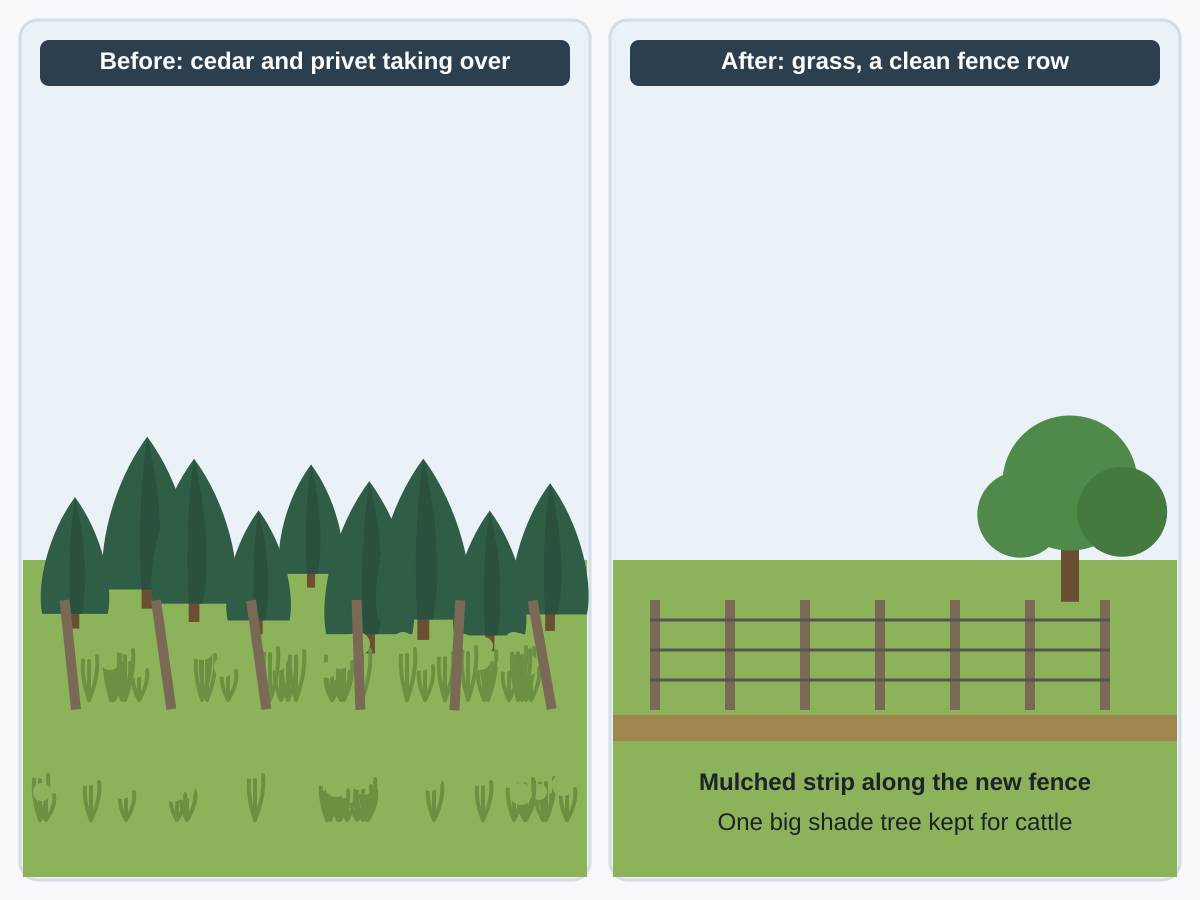
Signs a pasture or fence row needs clearing
- Cedars you cannot bush-hog over. Once cedar trunks pass an inch or two, a rotary cutter will not handle them and the field starts closing in.
- Grass disappearing under shade. Fescue and orchardgrass thin out quickly under a cedar canopy.
- A fence you can no longer see. Hackberry, cedar and honeysuckle grow through the wire, pull posts over and make repairs impossible.
- Blackberry and multiflora rose taking whole corners of the field.
- New owners of a farm that has not been grazed or mowed in years.
How pasture reclamation usually works
- Walk the field and the lines. Mark the property line, keeper shade trees, wet weather springs, sinkholes and any water crossings. On many Maury County farms, old stone walls and rock piles lie hidden in the brush.
- Clear. On open fields grown up in cedar and brush, forestry mulching is common because it leaves stumps low enough to mow and the ground covered. Heavier timber along old fence rows may be cut and piled with an excavator first.
- Handle stumps for mowing. Pasture stumps do not need to come out, but they need to be low enough that a hay mower or bush hog passes over them. See stump removal.
- Deal with the debris. Mulch in place, or pile and burn in season with a permit. The Maury County clearing rules guide explains the burn permit.
- Soil test, lime and seed. Reclaimed ground usually needs lime and a seeding plan before it will carry livestock again.
- Keep it open. Mowing or grazing every year stops the next crop of cedar before it starts.
Fence line clearing
A fence builder needs a straight, clear lane to set posts and stretch wire. Clearing a fence line usually means removing trees and brush for a strip on both sides of where the new fence will go, grinding or cutting stumps low in that strip, and pulling old wire and posts. Where the property line is uncertain, have it surveyed before clearing; a new fence built on a guess can lead to a dispute with a neighbor that no one wants.
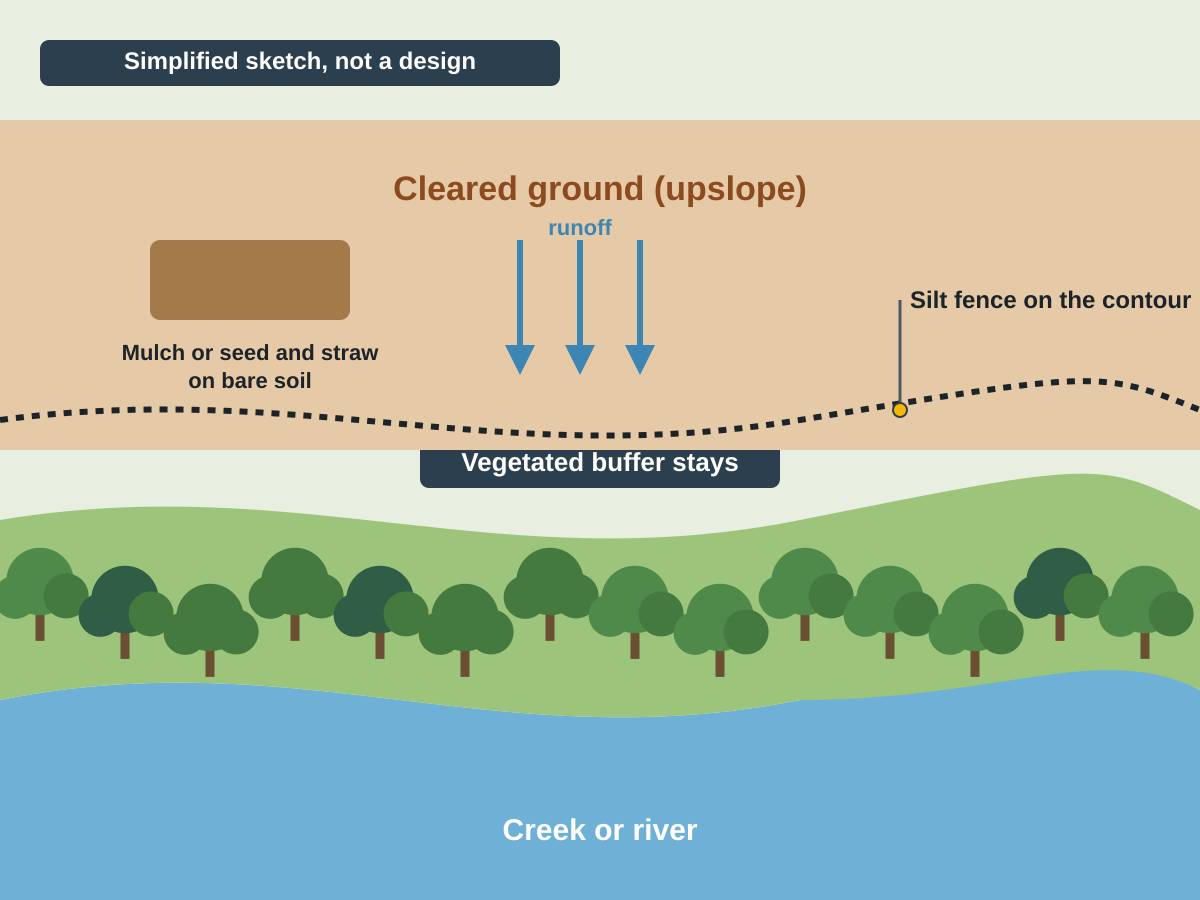
If the fence row runs along a creek or wet-weather branch, leave the streamside trees and shrubs in place as a buffer. They hold the bank and filter runoff, and work in or across a stream can need a state permit from TDEC.
What drives the cost
- Acreage and density of cedar and brush
- Linear feet of fence row and the width to be cleared
- Old wire and posts to remove
- Rock and slope: limestone outcrops and steep knobs slow the work
- Finish: mowable and seeded ground costs more than a rough pass
- Debris: mulched, burned or hauled
The land clearing cost guide has per-acre and per-foot planning ranges. For a price on your farm, call (931) 534‑0398.
Questions to ask a contractor
- How low will stumps be, and can a hay mower run over the field afterward?
- Do you pull old wire and posts, or should I have that done first?
- How wide will you clear the fence line, and on which side?
- What will you leave along the creek?
- Will you seed or leave that to me?
- Can you show proof of liability insurance?
Get connected
Whether it is twenty acres of cedar near Santa Fe or a quarter-mile fence row outside Culleoka, tell us what you have. We'll connect you with an experienced, qualified local professional who does pasture and fence line work in Maury County.